Much of the day-to-day work at Mission Siret follows a familiar routine, but it also regularly brings unexpected challenges. Our team recently experienced one of these while delivering a urgently needed patient transport vehicle to Ukraine.
The vehicle – donated by our Swedish partner organisation Johanniterhjälpen – was intended to support the municipal emergency medical service of a small town in western Ukraine. However, shortly before reaching its destination, the journey took an unexpected turn:
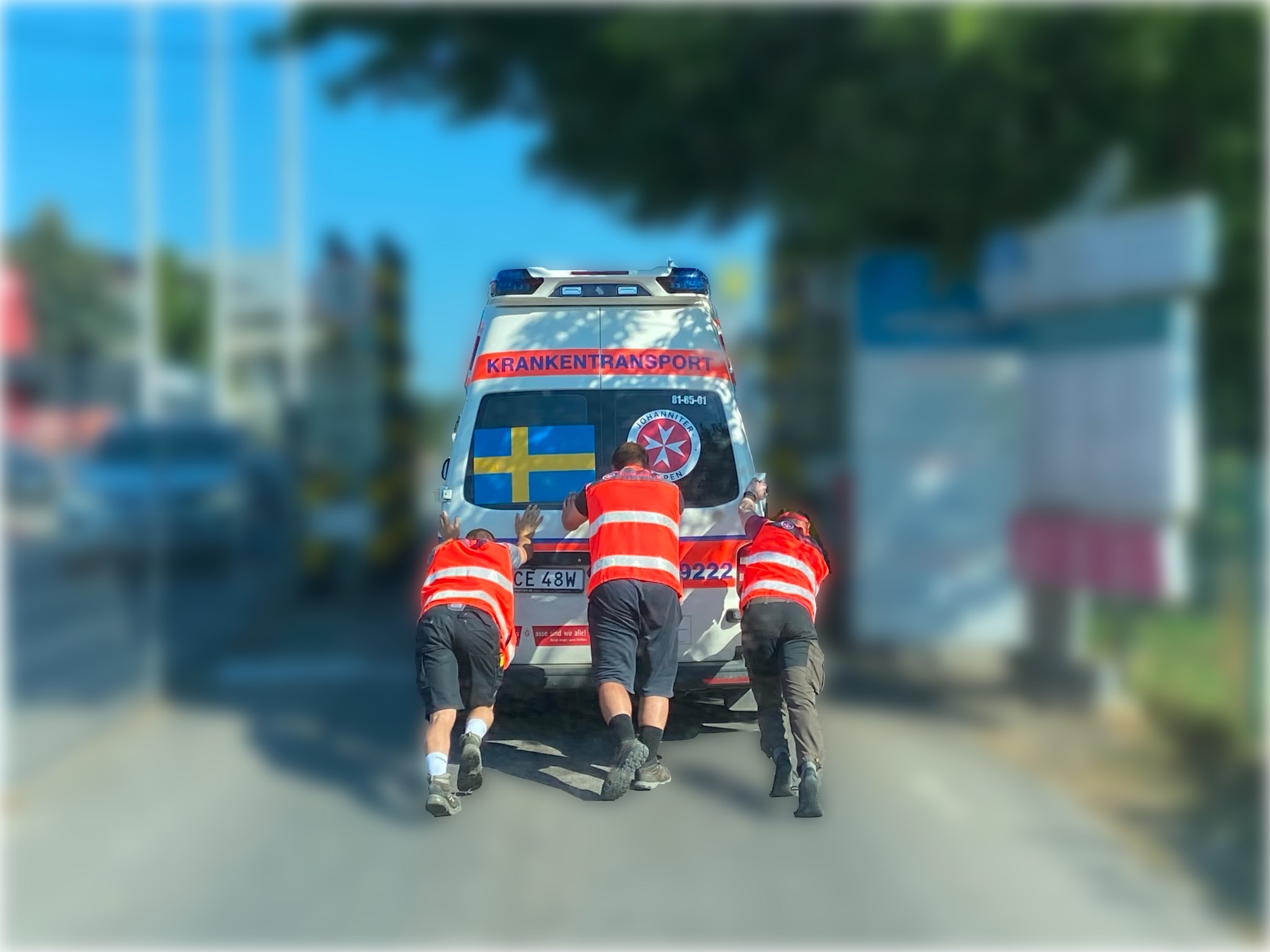
Immediately after passing the Romanian border control, right in the narrow transit corridor leading into Ukraine, the ambulance’s engine suddenly failed. Our volunteers tried several times to restart the vehicle, but the engine simply would not start.
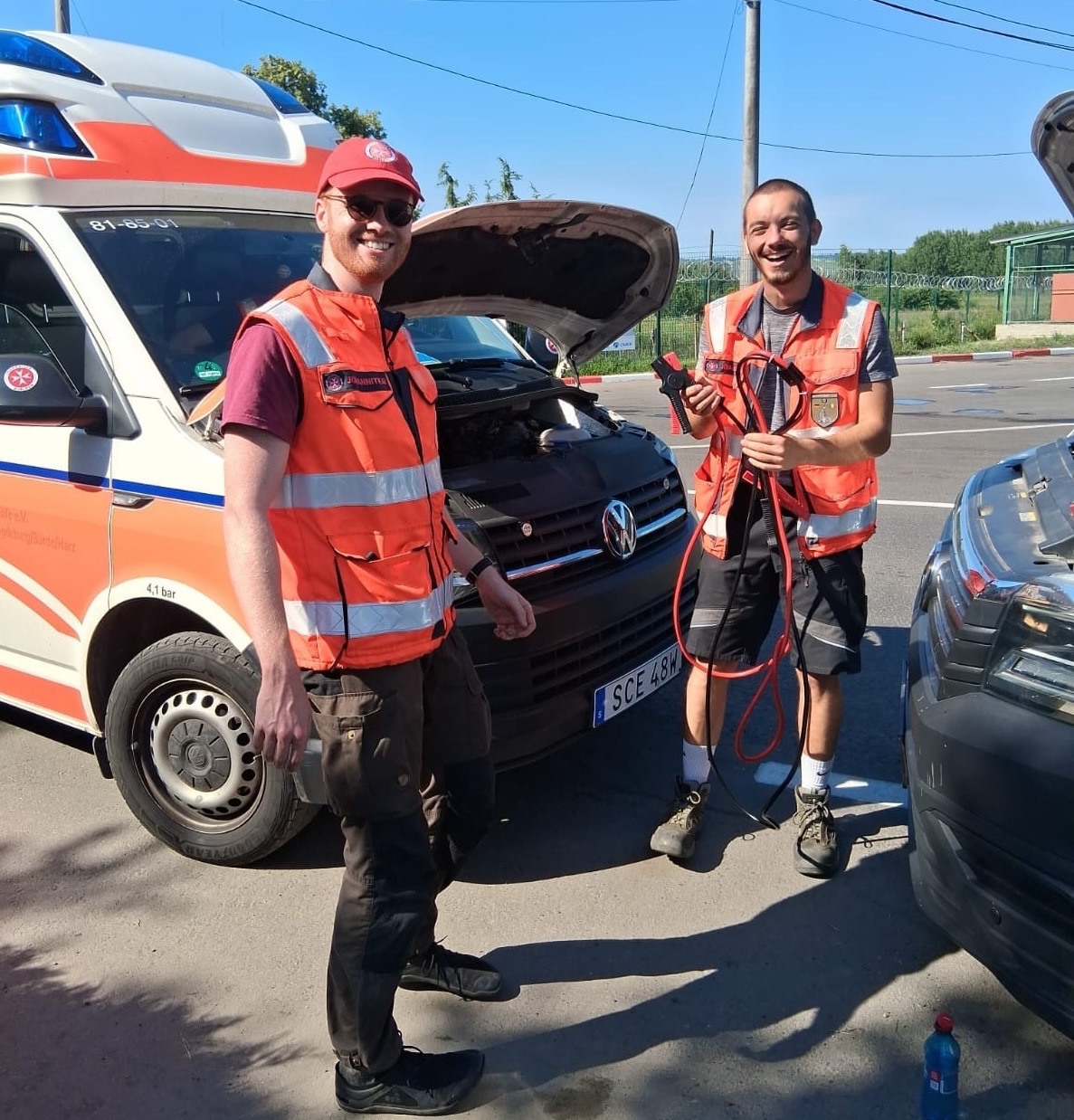
The queue of cars behind them grew increasingly restless, horns began sounding, and our volunteers initially had no choice but to push the vehicle across the demarcation line into Ukraine themselves. Only once they had reached the Ukrainian side could the team calmly investigate the cause of the breakdown and use a charging cable from one of the other transport vehicles to get the ambulance running again.
The battery had presumably drained during the previous night, as a Romanian repair shop had worked on the vehicle’s blue lights the day before. Due to the numerous medical devices on board, the electrical systems of ambulances are highly complex, and it is possible that the mechanics overlooked a connection while carrying out the repairs.